Why Blackheath Homeowners Are Investing in Loft Conversions Right Now
Why Blackheath Homeowners Are Investing in Loft Conversions Right Now
If you've been walking the tree-lined streets around Blackheath Village lately, you've probably noticed the unmistakable silhouette of scaffolding and the neat dormer windows punctuating the rooflines of Victorian and Edwardian terraces. Loft conversions are booming across SE3 and the surrounding areas — and for very good reason. At Heath Projects, we're seeing more Blackheath homeowners than ever making the smart decision to build upwards. Here's why, and what you need to know before you take the plunge.
The Property Market Is Making Loft Conversions a No-Brainer
Blackheath and Greenwich consistently rank among the most desirable postcodes in South East London. Properties here hold their value exceptionally well, and demand from families wanting to be close to Blackheath Standard, the open heath, and the excellent local schools in the area remains fierce. Moving to a larger home in SE3 right now means facing serious competition and eye-watering stamp duty costs. Converting your loft sidesteps all of that.
A well-executed loft conversion can add real value in Blackheath, particularly on the larger Victorian semis and terraces around Montpelier Row and Morden Road, where an extra floor tends to be worth most. The uplift depends on your property and the market at the time, so a local valuer is the right person to put a number on it before you commit to a budget.
What Types of Loft Conversion Work Best in Blackheath?
The housing stock in Blackheath, Lee Green, and Lewisham is largely Victorian and Edwardian, which is great news. These properties typically have a generous roof pitch, meaning there's usually ample natural height to work with.
Dormer Loft Conversions
The most popular choice for terraced and semi-detached homes across Blackheath and Kidbrooke. A rear dormer extends the flat section of your roof to create a full-height room with proper windows and natural light. Under Permitted Development rights, many rear dormers can be built without full planning permission — though it's always worth checking with the London Borough of Lewisham or the Royal Borough of Greenwich depending on your exact postcode.
Hip-to-Gable Conversions
If you own a detached or end-of-terrace property in areas like Eltham or Lee, a hip-to-gable conversion can dramatically increase the usable floor space by reshaping the sloping side roof into a vertical gable wall.
Velux / Rooflight Conversions
The most cost-effective option, and often achievable entirely under Permitted Development. These work well for homeowners in conservation-sensitive streets around Blackheath Village where external changes to the roofline need to be minimal.
Planning Permission and Conservation Areas — What Blackheath Homeowners Need to Know
This is where local knowledge really matters. Parts of Blackheath sit within designated conservation areas, particularly around the heath itself and Blackheath Park. If your home falls within one of these zones, you'll need to apply for full planning permission rather than relying on Permitted Development rights. Permitted Development rules also don't apply to flats — something that catches many homeowners off guard.
Our team at Heath Projects has extensive experience working with both Lewisham Council and Greenwich Council planning departments. We know what they're looking for, what's likely to be approved, and how to present an application that moves smoothly through the process.
Practical Tips Before You Begin
1. Get a structural survey first. Before any design work begins, a structural engineer should assess your existing roof, joists, and load-bearing walls. This is non-negotiable.
2. Think about the staircase early. The staircase to your new loft room needs to meet Building Regulations for pitch and headroom. Planning where it sits in your existing layout early avoids costly redesigns later.
3. Consider natural light carefully. Roof windows, dormers, and even juliet balconies can transform a loft from a dark storage space into a genuinely beautiful room. Think about which direction your roof faces — south-facing rear roofs on the typical terraces around Deptford and Catford get wonderful afternoon light.
4. Factor in insulation and ventilation. A loft conversion must meet current Building Regulations for thermal performance. Getting this right from the outset means lower energy bills and a more comfortable space year-round.
5. Use a local contractor who knows the area. This isn't just a sales pitch — it genuinely matters. A team that has worked extensively across Blackheath, Woolwich, and Greenwich understands the quirks of local housing stock, has relationships with local suppliers, and can navigate the planning process with confidence.
The Real-Life Results
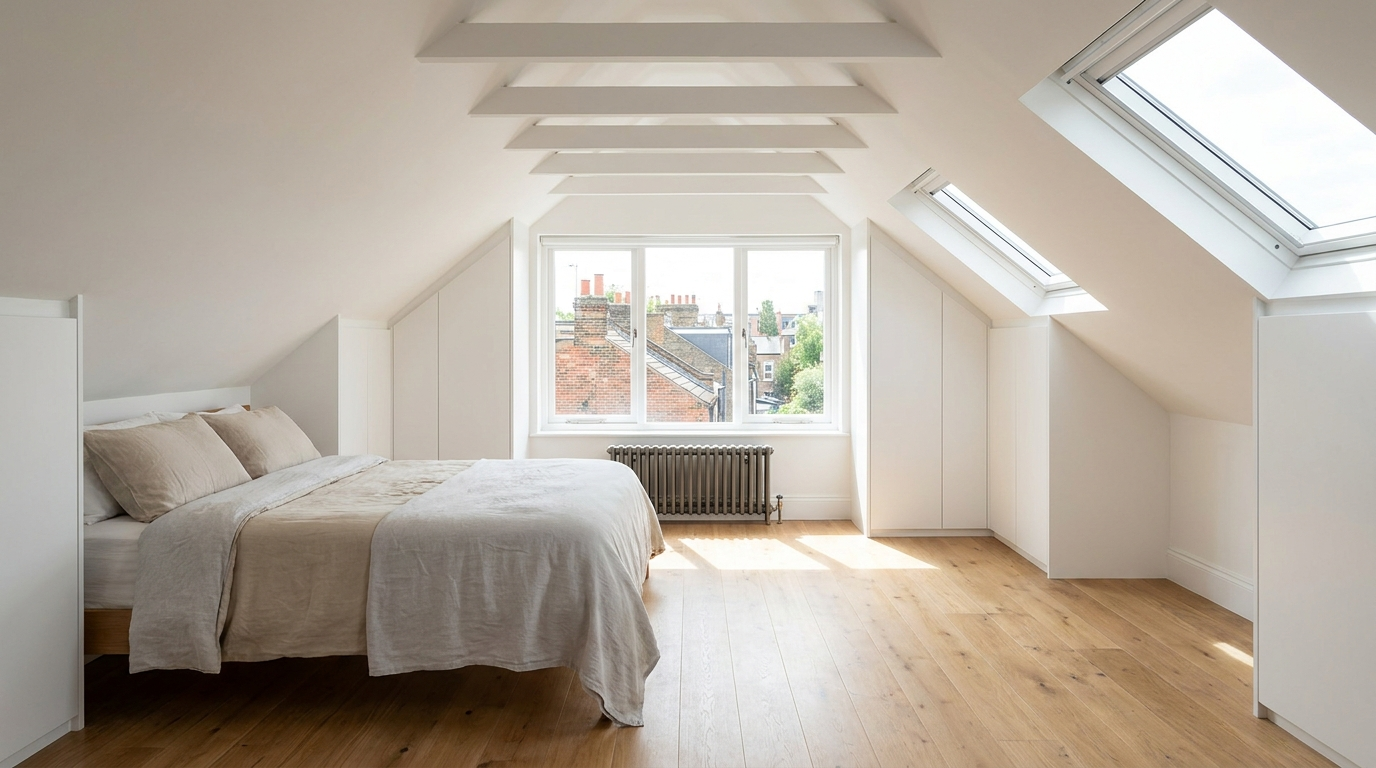
Across SE London, we're regularly completing loft conversions that transform underused roof spaces into stunning master bedrooms with en-suite bathrooms, home offices flooded with natural light, or flexible family spaces that growing households desperately need. The investment typically pays for itself — and then some.
Ready to Build Upward?
If you're a Blackheath homeowner thinking about making the most of your property, there's never been a better time to explore a loft conversion. Heath Projects brings craftsmanship, local expertise, and a genuine passion for quality to every project we take on. Shaping spaces, defining standards — that's not just our tagline, it's our promise.
Book a free site visit and let's talk about what your roof space could become.
